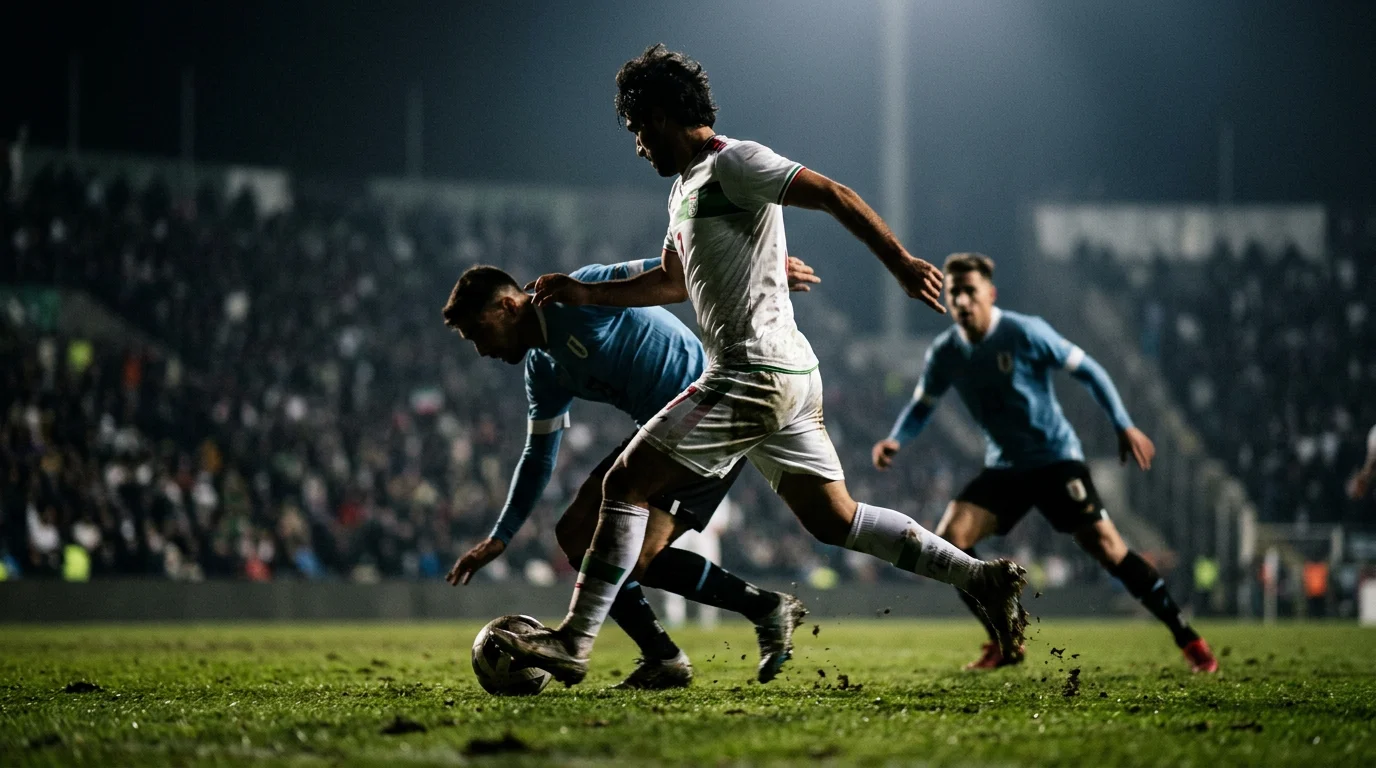
Every four years, the World Cup offers a rare escape, uniting players and fans in the unpredictable theater of football. For Iran, though, the tournament has become inseparable from the turmoil swirling outside the stadium. Political conflict, logistical headaches, and a fractured diaspora have all bled into Team Melli’s 2026 campaign, turning what should be a celebration into a test of resilience.
Iran’s journey to Los Angeles was fraught from the start. Just days before their opening match, a tentative agreement between the United States and Iran paused hostilities and reopened the Strait of Hormuz. Months of open conflict had ended, but tension lingered. Mehdi Taremi, the veteran striker with two previous World Cups behind him, felt the strain immediately.
“This kind of tension undermines the joy of the World Cup,” Taremi said, his voice carrying through a press room thick with anxiety. The team’s plans had already been upended. Visa issues forced Iran to abandon their base camp in Tucson. Arizona, and relocate to Tijuana. Mexico, at the last minute. Their arrival in Los Angeles was rushed and disorienting.
Manager Amir Ghalenoei didn’t sugarcoat the situation. “Without any doubt, this kind of behaviour has impacted the spirit of football,” he told reporters. Football, he argued, should unite nations, not drive them further apart. The disruption hit the core of their preparations. “These conditions have affected our focus, but I have tried to make sure the players concentrate on strategy and performance.” Despite the chaos. Ghalenoei insisted the squad’s commitment had not wavered, even as precious adaptation time slipped away.
A Divided Diaspora and a Fraught Stage in Los Angeles

Sanctuary on the pitch will be hard to find. SoFi Stadium, set in the heart of “Tehrangeles,” will host a crowd as divided as the country it represents. The Iranian-American community, many of whom left Iran after the revolution, is split in its allegiances. Fifa’s ban on the pre-revolutionary Lion and Sun flag has only heightened tensions. “You don’t come to Los Angeles and tell us we can’t fly the Lion and Sun flag,” said activist Arezo Rashidian, who is helping organize demonstrations outside the stadium. For much of the diaspora, opposition to the regime is personal and public.
Political fault lines run through the tournament itself. The World Cup’s sprawling, tri-nation format has created headaches for more than just Iran. Uruguay, another contender, saw its travel plans collapse amid paperwork delays and last-minute changes. Iran’s struggles to secure US visas for backroom staff have only deepened the instability dogging their campaign.
Amid the chaos, the human element refuses to be overshadowed. Taremi, with over 100 caps and memories of past tournaments, stands as a symbol of a player caught between global headlines and the simple act of playing football. He didn’t hesitate when asked about the mood in camp. “I felt the tension from the first moment we arrived. The tension started even before we got here.” His words reflect a squad forced to improvise, deprived of the routines and camaraderie that usually define World Cup journeys.
For some, the World Cup is a “macro-distraction,” a spectacle powerful enough to briefly eclipse even the most persistent political shadows. For Team Melli, those shadows are everywhere: in every late arrival, every absent staff member, every protest outside the stadium. Iran will open their campaign against New Zealand before a passionate, divided crowd, fully aware that every moment on the pitch will be judged against a backdrop no referee can control.
Preparation time is gone. Commitment remains. As Iran’s players stepped onto LA soil from their makeshift base in Tijuana, the story had already outgrown football. The next ninety minutes won’t erase the tension. For Taremi and his teammates, chasing joy on the world stage is itself an act of defiance.